

Shah Mosque / New Abbasi Mosque
The Shah Mosque is located in Isfahan, Iran. It is located on the south side of Naghsh-e Jahan Square. It was built during the Safavid dynasty under the order of Shah Abbas I of Persia. View of the Mosque from Naqsh-e Jahan Square It is regarded as one of the masterpieces of Persian architecture in the Islamic era. The Royal Mosque is registered, along with the Naghsh-e Jahan Square, as a UNESCO World Heritage Site. Its construction began in 1611 and completed in 1629. The whole of the construction measures 100 by 130 metres, with the central courtyard measuring 70 by 70 metres. The Mosque is surrounded with four iwans and arcades. All the walls are ornamented with seven-color mosaic tile. Its splendour is mainly due to the beauty of its seven-colour mosaic tiles and calligraphic inscriptions. The architect of the mosque is Ali Akbar Isfahani. The inscription also mentions that the supervisor of the construction as Muhibb ‘Ali Beg Lala who was also a major donor to the mosque.
Another architect Badi al-zaman-i Tuni may have been involved in its early design. Standing in the public square, or Maidan, the entrance-iwan (gateway) to the mosque takes the form of a semicircle, resembling a recessed half-moon and measuring 27 meters in height, the arch framed by turquoise ornament and decorated with rich stalactite-like tilework called muqarnas, a distinct feature of Persian Islamic architecture. At the sides rise two minarets, 42 meters high, topped by beautifully carved, wooden balconies with muqarnas running down the sides. In the middle, in front of the entrance, stood a small pool and a resting place for the horses, and inside the worshipers found a large marble basin set on a pedestal, filled with fresh water or lemonade. This basin still stands as it has for four hundred years, but no longer serves the function of providing refreshments to the worshipers at the Friday prayers. The distinct feature of any mosque is the minaret, and the Masjed-e Shah has four.
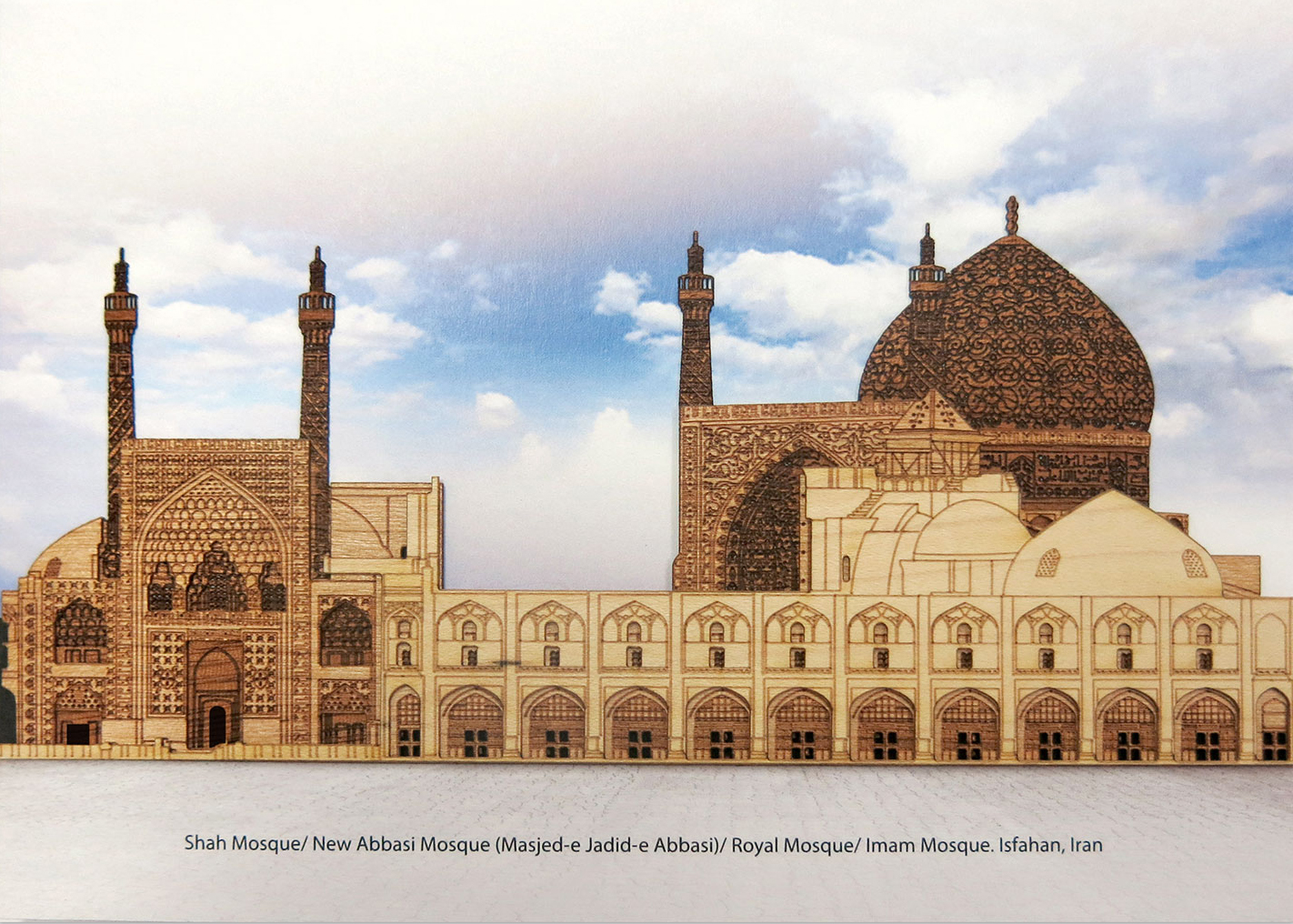
- Shah Mosque / New Abbasi Mosque
- Location: Isfahan
- Country: Iran
- World Heritage : 3 UNIESCO listed

