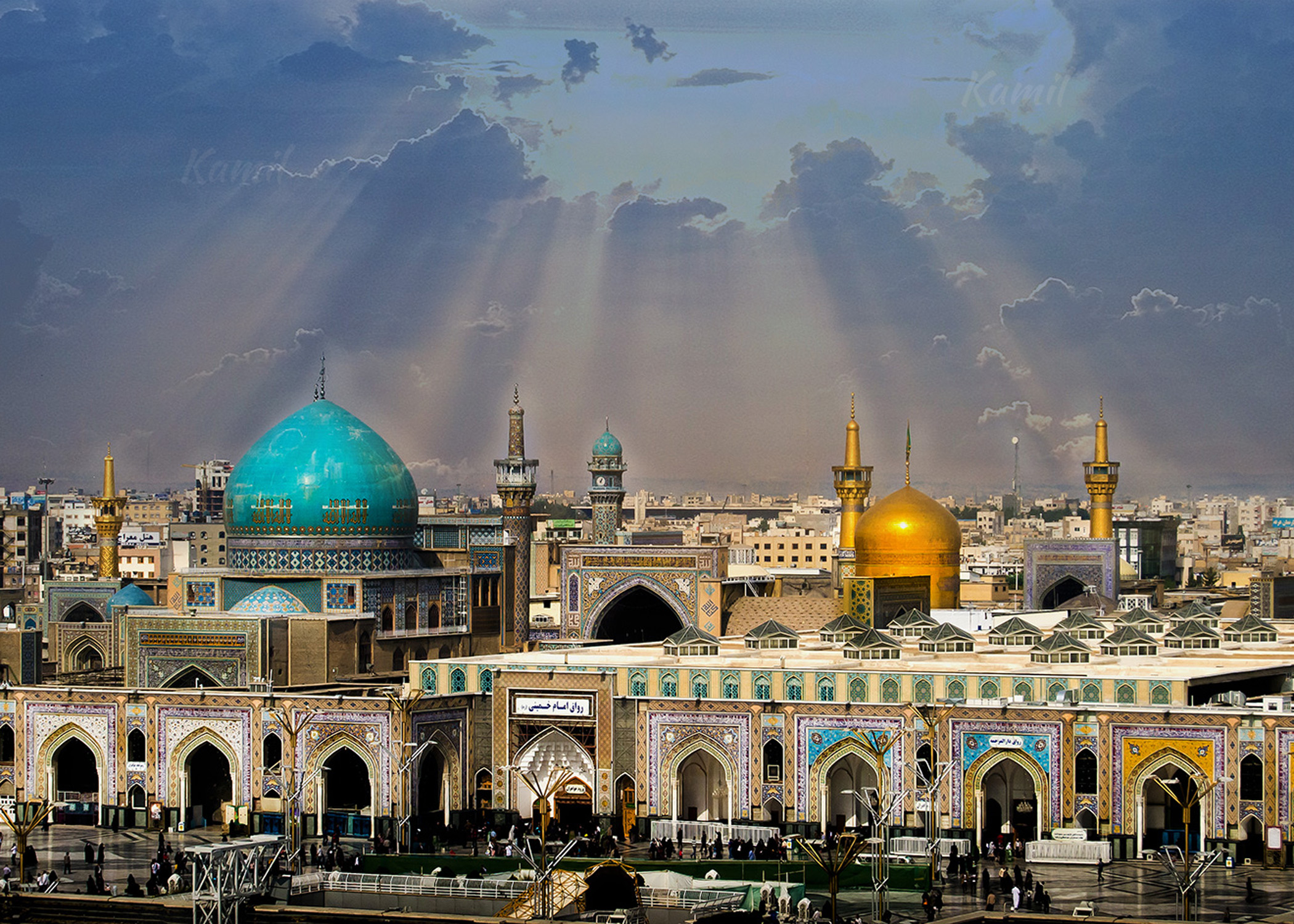

Imam Reza shrine
The Imam Reza shrine in Mashhad, Iran, is a complex which contains the mausoleum of Imam Reza. It is the largest mosque in the world by area. Also contained within the complex are the Goharshad Mosque, a museum, a library, four seminaries, a cemetery, the Razavi University of Islamic Sciences, a dining hall for pilgrims, vast prayer halls, and other buildings. The complex is a tourism center in Iran and has been described as “the heart of the Shia Iran”. The shrine itself covers an area of 267,079 square metres while the seven courtyards which surround it cover an area of 331,578 square metres, totaling 598,657 square metres. By the end of the third Hijri century, a dome was built on the grave of Imam Reza and many buildings and bazaars sprang around the holy shrine. In 383 A.H. / 993 A.D., Sebuktigin, the Ghaznavid sultan devastated Mashhad and stopped the pilgrims from visiting the holy shrine of Imam Reza. But in 400 A.H./ 1009 A.D., Mahmud of Ghazni started the expansion and renovation of the holy shrine and built many fortifications around the city. At the time of Sultan Sanjar Saljuqi, after Sharaf al-Din Abu Tahir b. Sa’d b. Ali Qummi repaired the shrine, he began to construct a dome over it. In 612 A.H./ 1215 A.D., as borne out by inscriptions on certain tiles, Allaudin Khwarezm Shah carried out renovations on the shrine. During the Khwarazmian dynasty, Razavi Shrine was paid much attention and some repair and decoration was made inside it.[13] In this era (612 A.H./1215 A.D.), two very glorious embossed Thuluth (a large Naskh handwriting) inscriptions in form of square tile work were fixed on both sides of the shrine entrance-by the side of Dar al-Huffaz porch—in which the names and descent of Imam Reza back to Imam Ali were written.
In 1418, during Timurid era, Timurid Shahrukh Mirza’s, wife Empress Goharshad funded the construction of an outstanding mosque beside the shrine, which is known as the Goharshad Mosque. There were also some improvements in the Holy Shrine complex during the Qajar Dynasty, including new courtyard establishment and gilding its porch, both of them started during the reign of Fath-Ali Shah and finished during Naser al-Din Shah’s reign. Tawhid Khanah had the fine paintings and tiles of the Shrine decorated with mirrors in 1275/1858. Naser al-Din Shah, too, had the gold-coated bricks put up on the walls, from dado up to the top of western porch of the new courtyard and its stalactite-shaped ceiling. So, it was called “Nasiri Porch”.
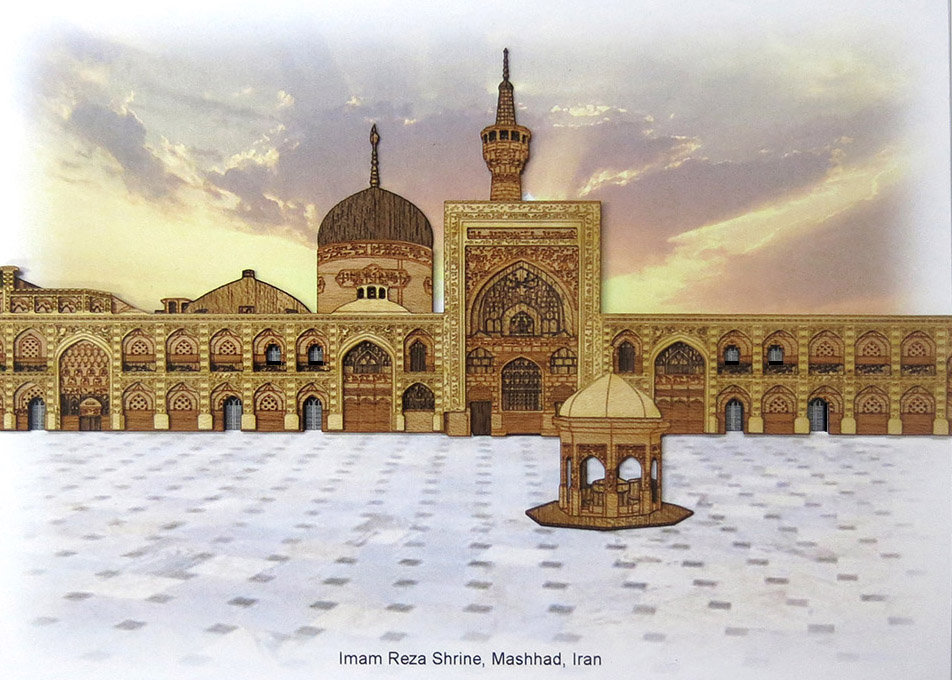
- Imam Reza shrine
- Location: Mashhad
- Country: Iran
- Area : 598,657 Square Meters