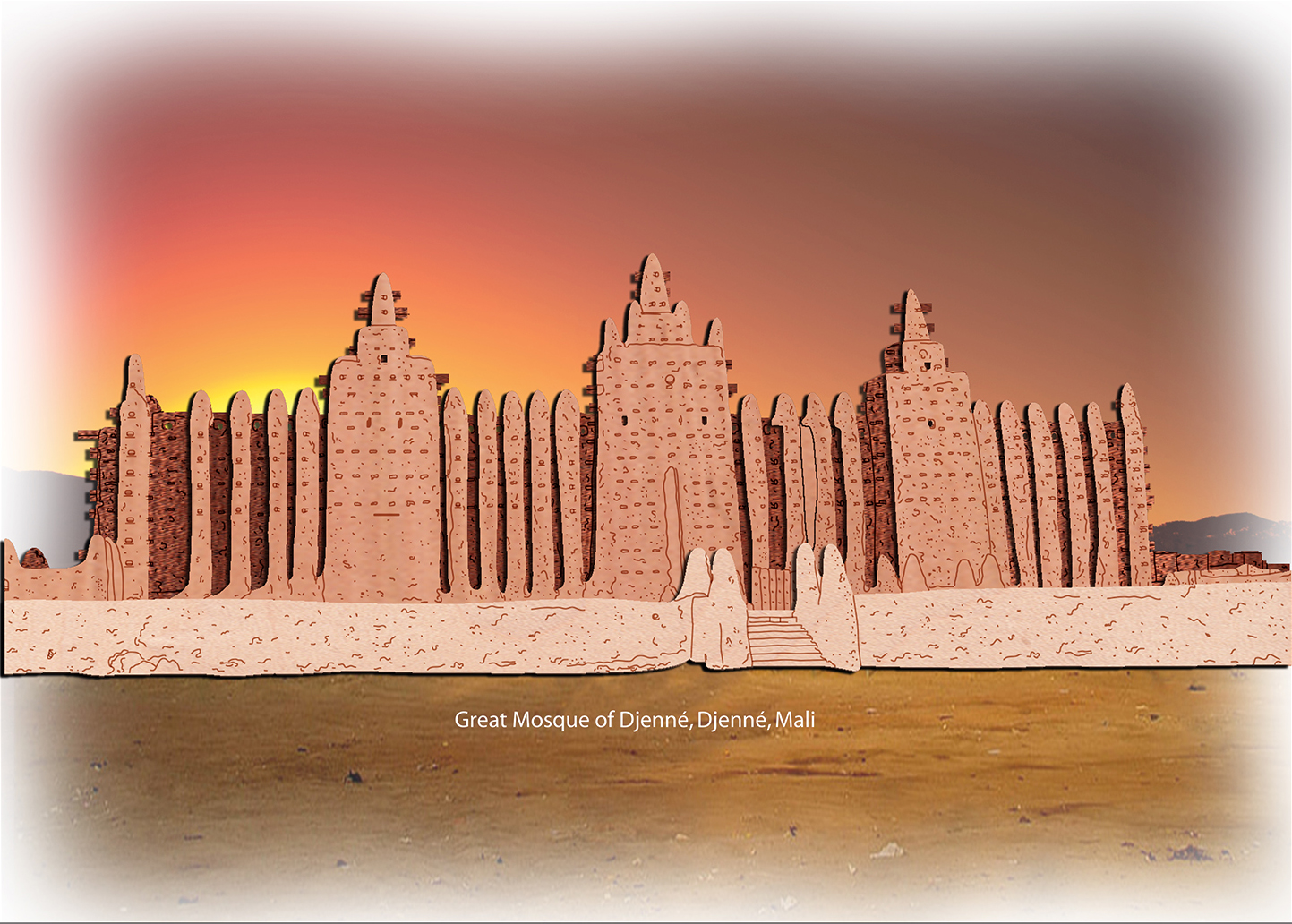
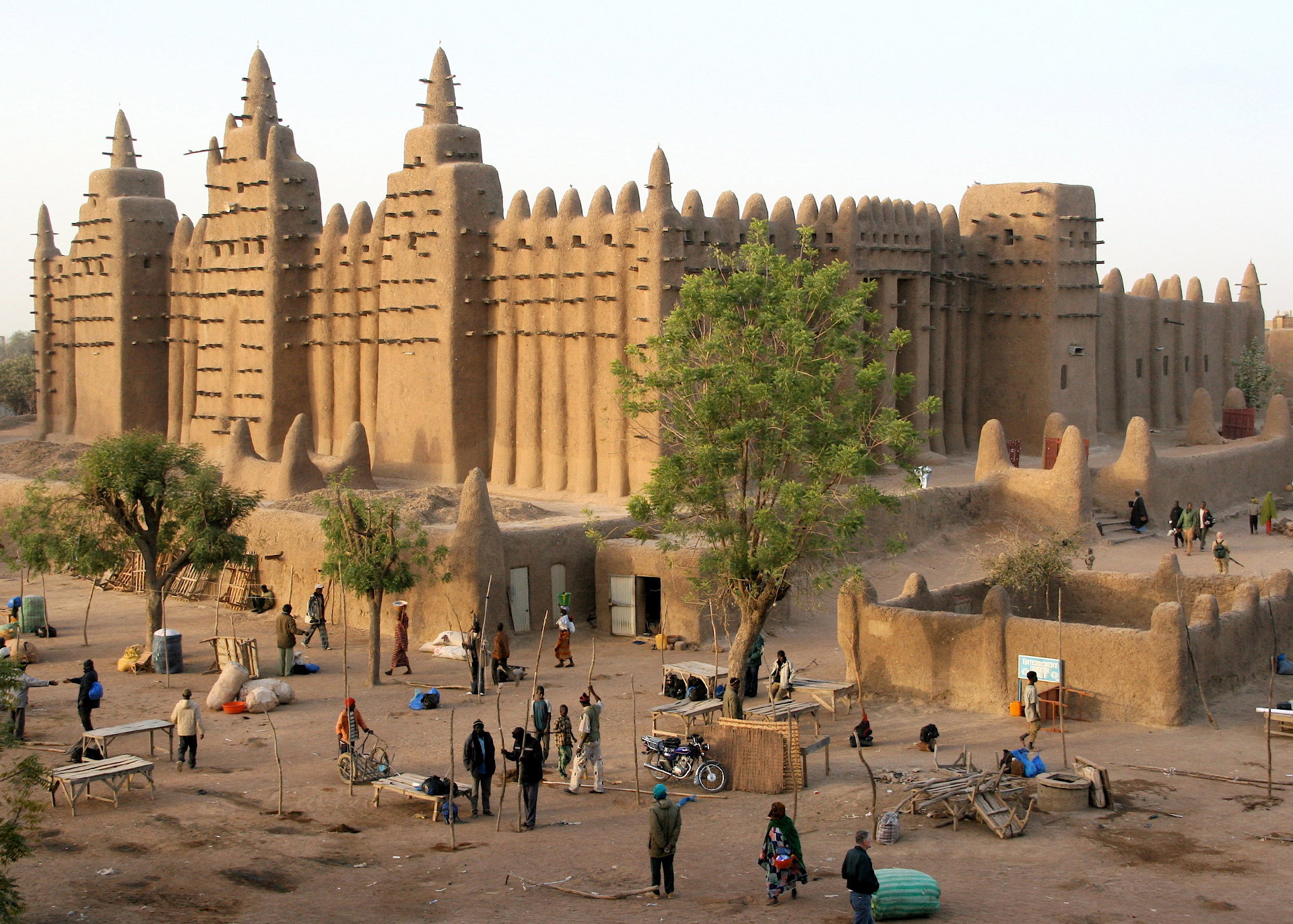
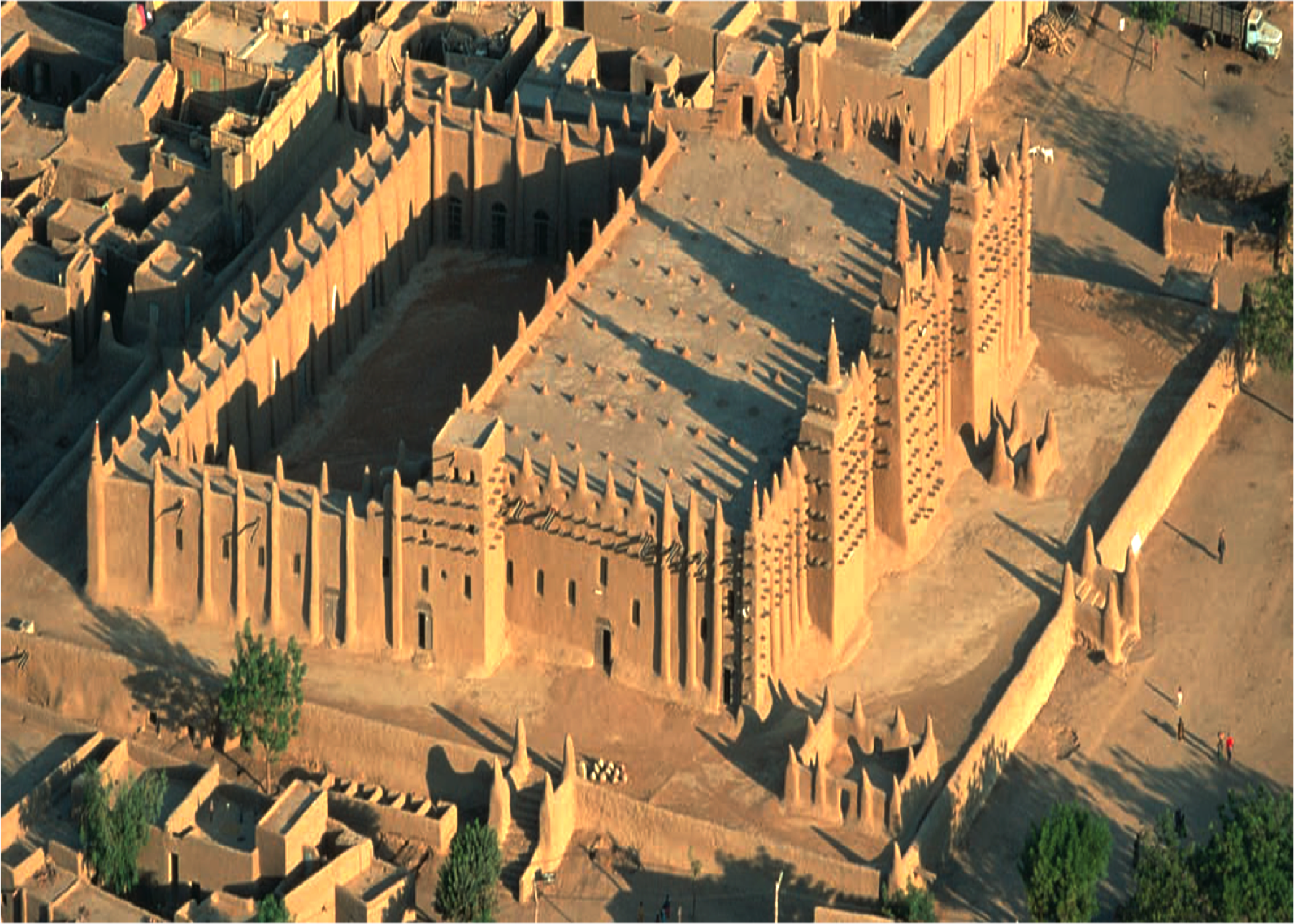
The Great Mosque of Djenné is a large brick or adobe building in the Sudano-Sahelian architectural style. The mosque is located in the city of Djenné, Mali, on the flood plain of the Bani River. The first mosque on the site was built around the 13th century, but the current structure dates from 1907. It is one of the most famous landmarks in Africa. Along with the “Old Towns of Djenné” it was designated a World Heritage Site by UNESCO in 1988. The walls of the Great Mosque are made of sun-baked earth bricks (called ferey), and sand and earth-based mortar, and are coated with a plaster which gives the building its smooth, sculpted look.
The walls of the building are decorated with bundles of rodier palm (Borassus aethiopum) sticks, called toron, that project about 60 cm from the surface. The mosque is built on a platform measuring about 75 metres by 75 metres that is raised by 3 metres above the level of the marketplace. The platform prevents damage to the mosque when the Bani River floods. It is accessed by six sets of stairs, each decorated with pinnacles.