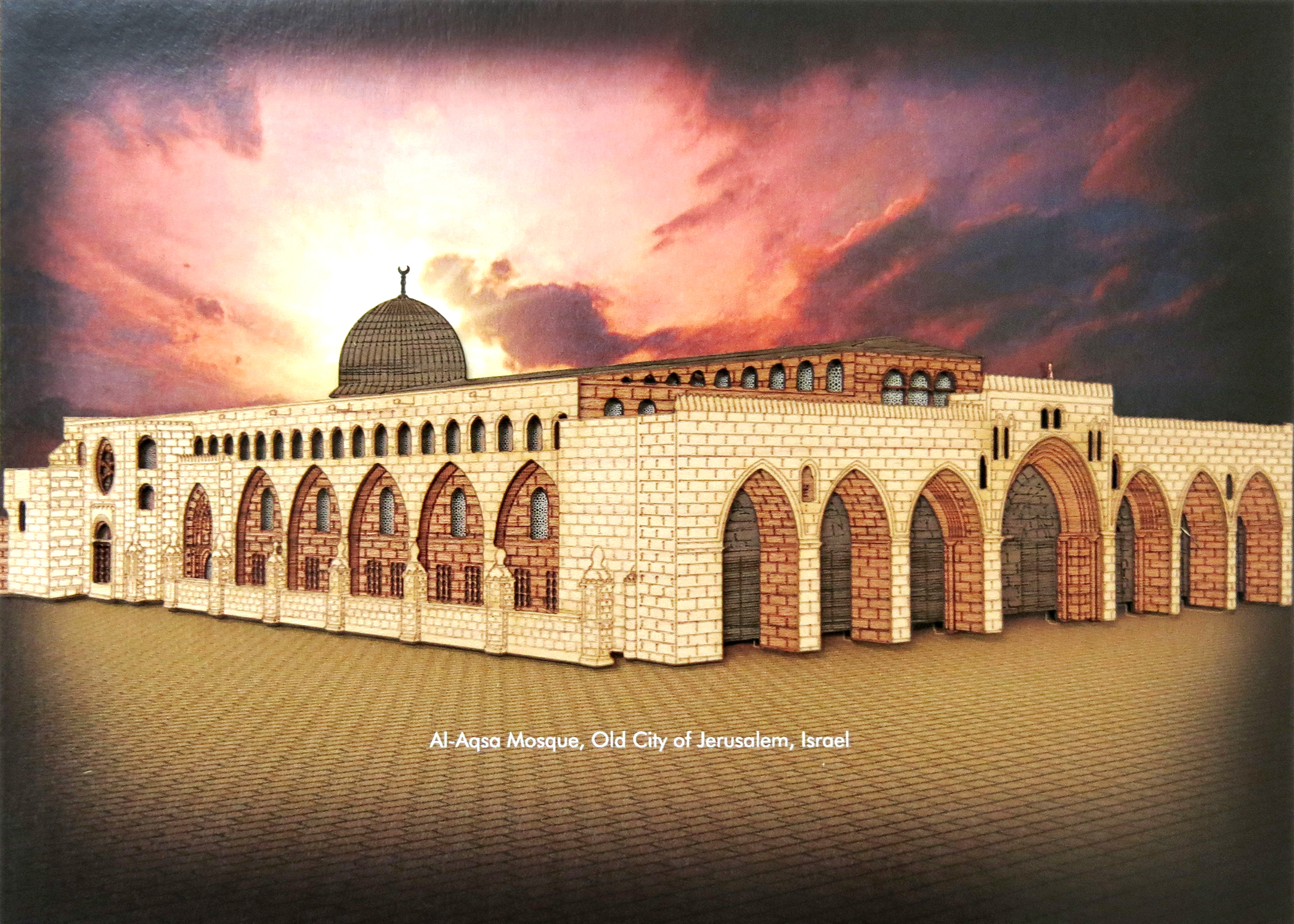
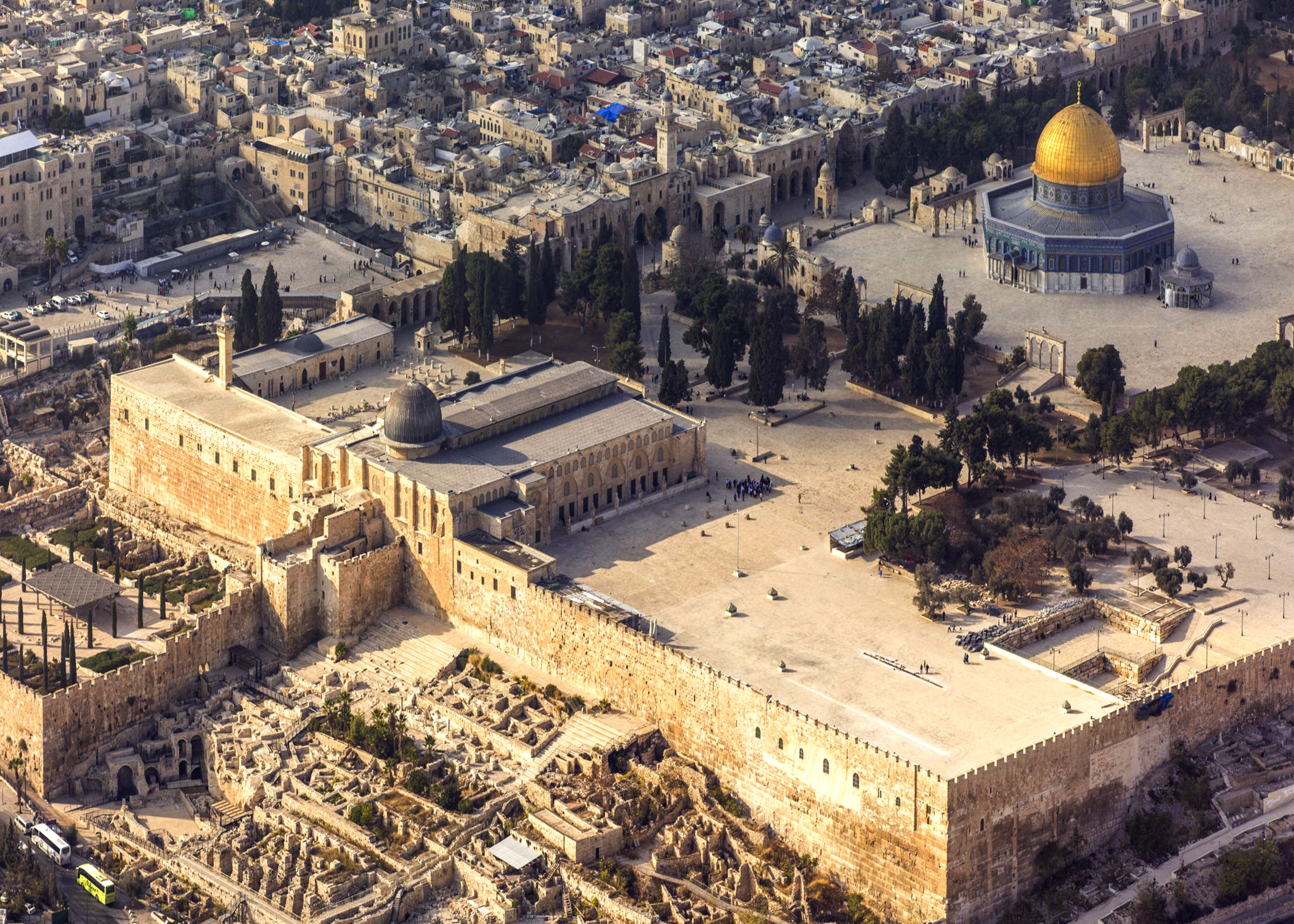
Al-Aqsa Mosque located in the Old City of Jerusalem, is the third holiest site in Islam. The mosque was built on top of the Temple Mount, known as the Al Aqsa Compound or Haram esh-Sharif in Islam. The covered mosque building was originally a small prayer house erected by Umar, the second caliph of the Rashidun Caliphate, after the Muslim conquest of the Levant in the early 7th century. It was rebuilt and expanded by the Umayyad caliph Abd al-Malik and finished by his son al-Walid in 705. The mosque was completely destroyed by an earthquake in 746 and rebuilt by the Abbasid caliph al-Mansur in 754. It was rebuilt again in 780.
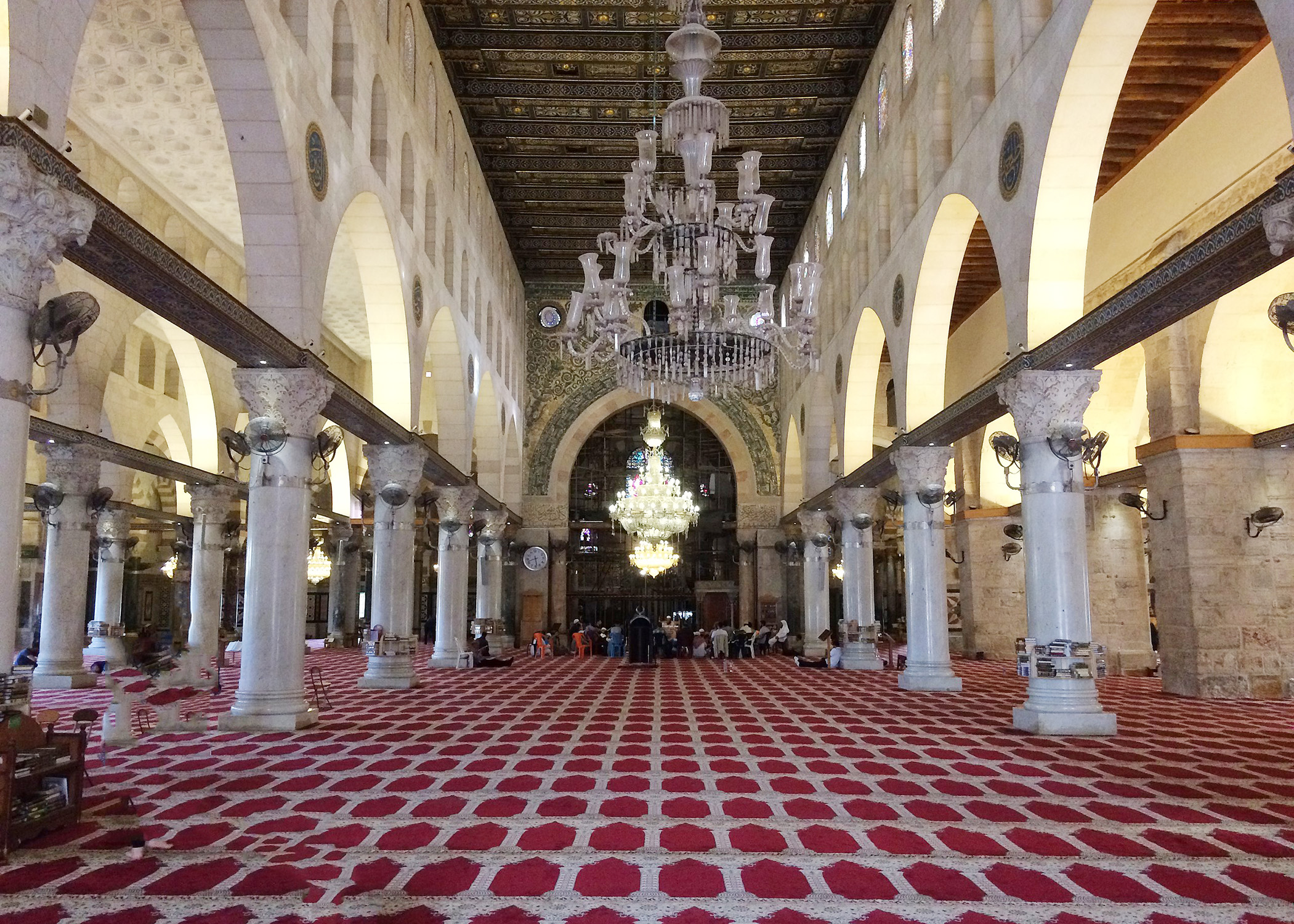
Another earthquake destroyed most of al-Aqsa in 1033, but two years later the Fatimid caliph Ali az-Zahir built another mosque whose outline is preserved in the current structure. The rectangular al-Aqsa Mosque and its precincts cover 14.4 hectares, although the mosque itself is about 12 acres in area and can hold up to 5,000 worshippers. It is 83 metre long, 56 metre wide. The al-Aqsa Mosque has seven aisles of hypostyle naves with several additional small halls to the west and east of the southern section of the building. There are 121 stained glass windows in the mosque from the Abbasid and Fatimid eras.