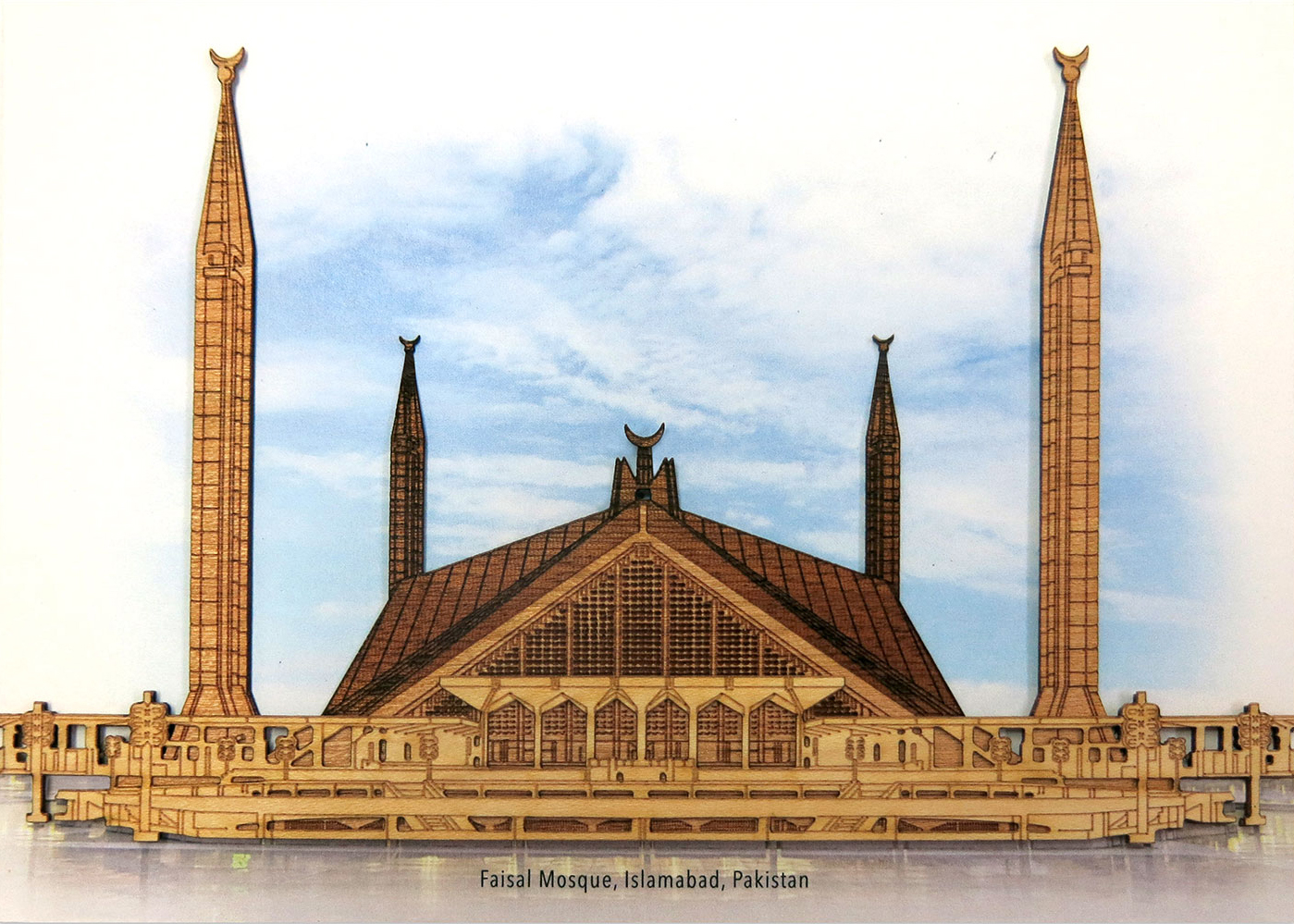
The Faisal Mosque is a mosque located in Islamabad, Pakistan. It is the sixth-largest mosque in the world and the largest within South Asia, located on the foothills of Margalla Hills in Pakistan’s capital city of Islamabad. A major tourist attraction in Pakistan, the mosque is a contemporary and influential piece of Islamic architecture. Construction of the mosque began in 1976 after a $28 million grant from Saudi King Faisal, whose name the mosque bears. The unconventional design by Turkish architect Vedat Dalokay was selected after an international competition.
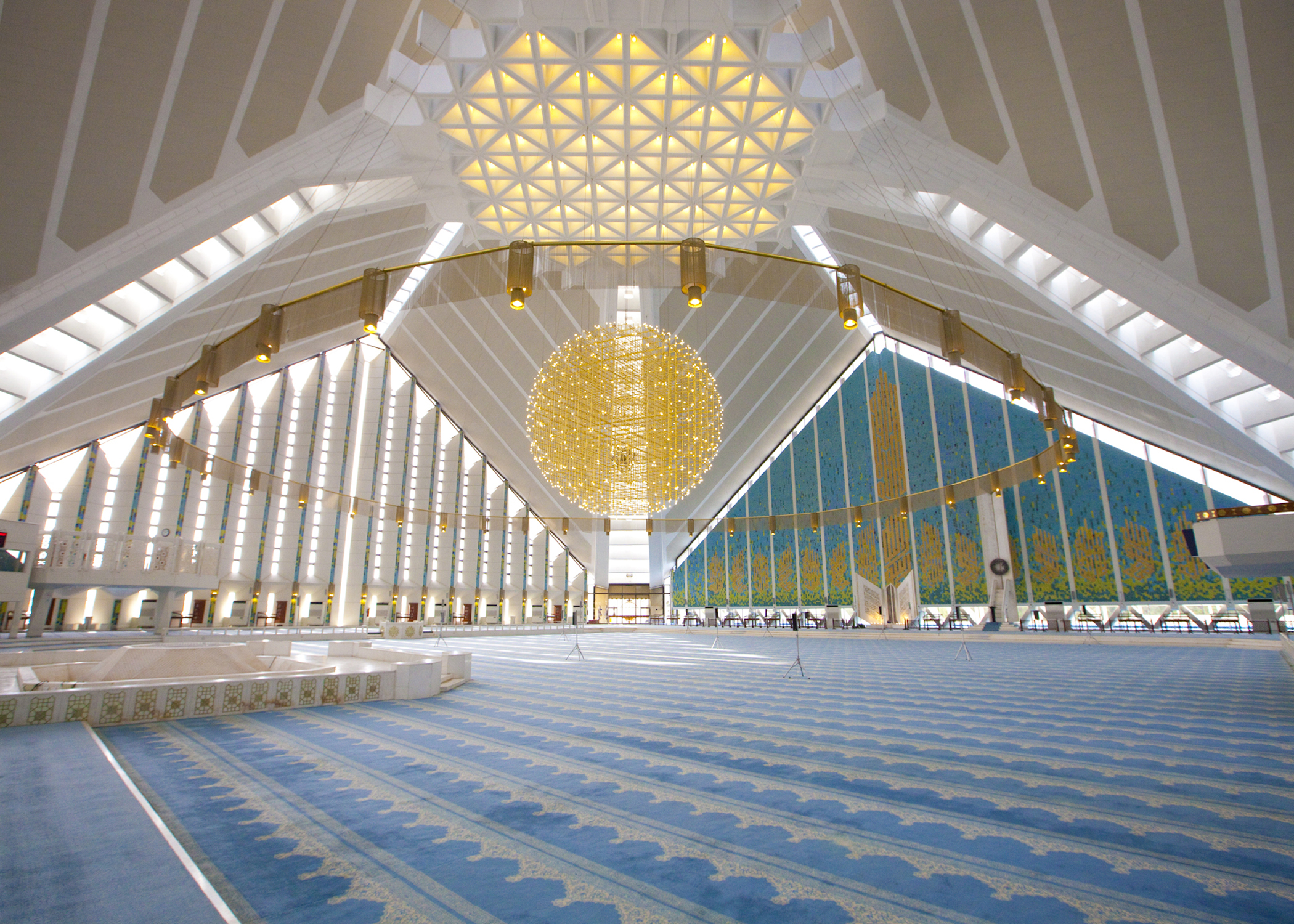
Without a typical dome, the mosque is shaped like a Bedouin tent, surrounded by four 260 feet tall minarets. The design features eight-sided shell shaped sloping roofs forming a triangular worship hall which can hold 10,000 worshippers. Combined the structure covers an area of 33 acres, the mosque dominates the landscape of Islamabad. The interior of the main tent-shaped hall is covered in white marble and decorated with mosaics and calligraphy by the famous Pakistani artist Sadequain, and a spectacular Turkish-style chandelier. The mosaic pattern adorns the west wall and has the Kalimah written in early Kufic script, repeated in mirror image pattern.